
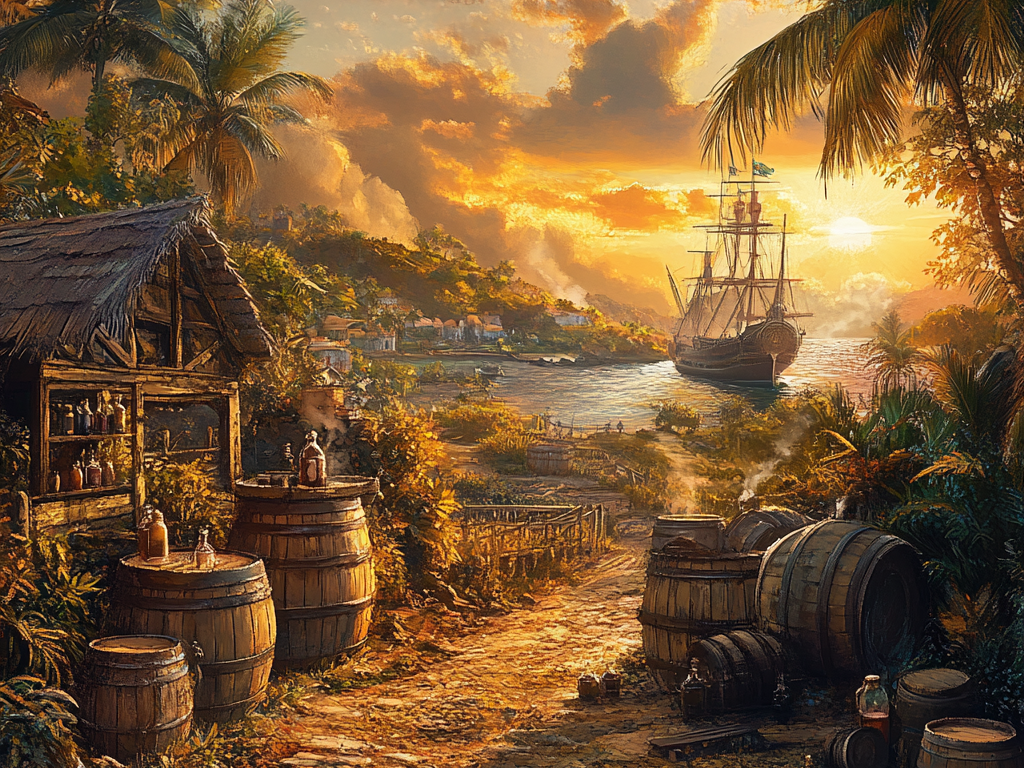
The Bitter Legacy of Rum, Slavery, and Empire
The Origins of Rum and the Caribbean Sugar Boom
Rum’s story begins in the Caribbean, where European colonizers landed not for sun-soaked beaches, but for sugarcane—a crop as prized in Europe as silver. As anthropologist Sidney Mintz notes, “The Caribbean became the world’s first region of monocrop agriculture… to serve Europe’s sweet tooth and growing colonial ambitions.”
To realize this vision, plantation owners relied on the brutal labor of enslaved Africans. Distilling molasses into rum became an enterprising sideline for these plantation owners, turning syrupy waste into a potent spirit, wildly popular among sailors and traders. As historian John McCusker observed, “Rum was not merely a drink, but a currency of trade… the financial backbone for the colonial economy.” And so, rum emerged as both a commodity and a symbol of European power in the Caribbean.
Rum, the Triangle Trade, and Enslavement
Rum was central to the notorious Triangle Trade, a system that linked Africa, the Americas, and Europe in a horrific cycle-of-profit. European ships carried goods to Africa, exchanged them for enslaved people, transported them to the Caribbean, and filled their holds with rum and sugar for the return voyage.
Historian Eric Williams remarked, “The profits derived from colonial plantations, especially in sugar and rum, were the fuel for European economic growth, driving the engines of capitalism.” Built on the suffering of enslaved laborers forced into grueling work, rum became a bitter emblem of exploitation. Historian Judith Carney captures this, describing Caribbean industries as “resting upon African knowledge and labor, forcibly transported to fuel colonial ambitions.”
Empire Building and the Rum Economy
Rum didn’t just sustain economies; it fueled empires. The British navy famously issued sailors a daily rum ration to boost morale and enforce discipline. The Caribbean’s rum profits shored up European powers, with McCusker noting, “The high profitability of rum underwrote colonial ventures and supported the economies of both the New World and the British Empire.” Wars were fought, treaties signed, and alliances forged over the control of the Caribbean’s “liquid gold.” For enslaved people and local communities, however, rum took on a layered symbolism—both as a product of oppression and a spirit embodying resilience.
Rum as a Symbol of Resistance
Within the Caribbean, rum became a symbol of defiance. Maroon communities—groups of escaped enslaved people who settled in the rugged interiors of places like Jamaica and Haiti—crafted their own rum as a testament to autonomy. In these communities, rum gatherings were often clandestine acts of solidarity and quiet rebellion.
Historian Ian Williams observed, “Rum was as much a staple of colonial life as food or shelter,” but in these spaces, it fostered a spirit of resistance. Even pirates viewed rum as a drink of freedom, trading it on their own terms and embracing it as a mark of defiance against colonial authorities. Rum, the “spirit of the Caribbean,” became a potent emblem of resilience for those who crafted it under oppressive conditions.
Rum’s Legacy in a Post-Colonial World
With Caribbean nations gaining independence, rum began to transform from a colonial product into a local symbol of pride. Small distilleries emerged, crafting unique, island-specific expressions with techniques ranging from Jamaican pot stills to Martinican rhums agricoles. Yet, multinational giants like Bacardi continue to dominate the global market, creating stiff competition for local producers. Still, as Stephan Palmié observes, “Rum production was not only a means of economic sustenance but a potent symbol of Caribbean identity, forged through labor and resilience amidst the brutal realities of colonial rule.” Rum has since become a global ambassador of Caribbean culture, standing for resilience and identity reclaimed.
A Toast to Resilience
Today, rum is enjoyed worldwide, yet it remains deeply tied to its origins. Historian Eric Williams reminds us, “The profits derived from colonial plantations… drove the engines of capitalism.” This darker side of rum’s legacy serves as a reminder of the brutal forces that shaped the Caribbean. At the same time, rum embodies a culture of resilience, defiance, and creativity, representing a history that refused to be subdued.
So, as you raise your glass, consider the journey this spirit has made—from Caribbean plantations to your glass. It’s a tribute to the islands that made it, the hands that crafted it, and the spirit of a people who turned suffering into strength. Here’s to rum: history, resilience, and Caribbean pride, distilled.
 The Rumosphere