
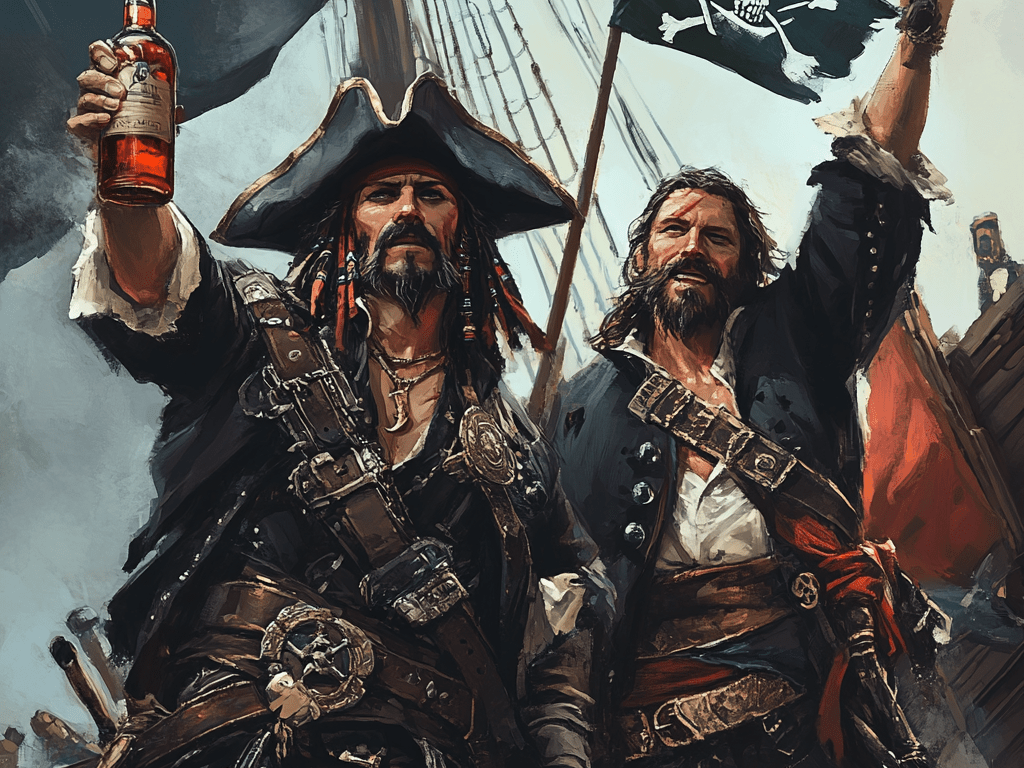
Rum and pirates are as inseparable in popular culture as parrots and eye patches. Yet, the true history behind this spirited association is both fascinating and surprising. Let’s delve into five intriguing facts that shed light on the storied relationship between rum and the swashbucklers of the high seas.
1. Pirates Didn’t Invent Rum (But They Sure Popularized It)
Rum’s origins trace back to the early 17th century in the Caribbean, where it was first distilled from sugarcane byproducts. Pirates, always on the lookout for potent libations, quickly adopted rum due to its availability and strength, helping to cement its association with seafaring rogues
Did you know? The term “rum” has uncertain origins, with theories suggesting it derives from words like “rumbullion,” meaning a great tumult or uproar.
2. The “Tot of Rum” Was Actually a Naval Tradition
The Royal Navy began issuing daily rum rations to sailors in 1655 after the capture of Jamaica, a practice that continued for over three centuries. Pirates, lacking such formal traditions, likely consumed rum more liberally, but the structured “tot” was a naval custom.
Fun fact: The navy’s rum was often mixed with water and citrus to create “grog,” aiming to prevent scurvy and ensure sailors stayed hydrated.
3. The Jolly Roger Flag Wasn’t Inspired by Rum Barrels
The iconic skull and crossbones flag, known as the Jolly Roger, was designed to intimidate targets into surrendering without a fight. There’s no historical evidence linking its design to rum barrels; instead, it symbolized the pirates’ deadly intent.
Quick trivia: The term “Jolly Roger” may originate from the French “jolie rouge,” meaning “pretty red,” referring to early red flags used by pirates to signal no mercy.
4. Pirates Drank What They Could Get—Not Just Rum
While rum was prevalent in the Caribbean, pirates were opportunistic drinkers, consuming whatever alcohol they could seize, including wine, brandy, and beer. Their reputation for rum stems largely from its abundance in the regions they frequented.
Interesting note: Early accounts of pirates like Captain Morgan don’t mention rum, highlighting that their choice of drink varied with availability.
5. Rum Was a Valuable Commodity—Sometimes Used as Currency
In the 18th century, rum was so valuable that it was often used as a medium of exchange. English privateers and pirates traded rum for goods and services, further entrenching it’s role in maritime culture.
Historical tidbit: Rum was even used as a form of payment in Australia around 1790.
Rum, Pirates & You
The intertwining tales of rum and pirates reveal a complex history beyond the legends. While pirates didn’t invent rum, their high-seas adventures certainly played a role in popularizing the spirit.
Ready to channel your inner buccaneer? Try crafting a classic Navy Grog at home and share your creation with us on Instagram using #Rumosphere!
 The Rumosphere