

The Golden Elixer as Good as Gold
Imagine sauntering into a tavern, tossing a bottle of rum on the counter, and walking out debt-free. Better yet, picture squaring off with a tax collector and instead of handing over cold hard cash, you offer him a barrel of rum. Sounds wild, right? Well, in the 18th century, rum wasn’t just a drink—it was practically cash.
Yes, before whiskey took over the American drinking scene, rum was king. And not just for pirates or rowdy sailors—rum held actual value. You could trade it for goods, pay wages with it, and even use it to bribe voters in a good ol’ colonial election. Turns out, rum didn’t just make things fun—it kept the economy buzzing. Welcome to the wild world where rum flowed like money.
From Liquid Courage to Liquid Currency
In the Caribbean and American colonies, rum wasn’t just a drink—it was the lifeblood of trade. Bartering was the name of the game, and rum was one of the most popular things to barter with. Need land? Pay with rum. Hiring shiphands? Hand over a few barrels. Rum was valuable because it was easy to transport, didn’t spoil, and let’s be honest, was a lot more fun than plain old silver or gold.
Even sailors—the lifeblood of these colonial trade routes—were often paid in rum. I mean, who wouldn’t want a liquid paycheck? But as much as we’d like to romanticize rum’s barter power, it wasn’t all cocktails and beach parties. Rum was also a key player in something much darker: the transatlantic slave trade.
The Dark Side of Rum’s Value: Slavery and the Triangular Trade
Rum’s role in the triangular trade wasn’t exactly sunshine and tropical breezes. The trade system worked like this: New Englanders took rum made from Caribbean molasses and shipped it to Africa, where it was traded for enslaved people. These captives were then sent to the Caribbean to work on sugar plantations, producing even more molasses to make—you guessed it—more rum. And around it went.
So while rum might have been valuable, its value came at a serious human cost. It’s a harsh reminder that the economic success surrounding rum had deep, painful ties to slavery and exploitation.
Buying Elections with Booze: George Washington’s 144-Gallon Bribe
Rum wasn’t just for trade—it was a full-blown political tool. Back in colonial times, elections weren’t about flashy TV ads or social media campaigns. The Elon Musks of the day weren’t buying votes with million dollar lotteries, instead, it was all about who could throw the best party. And the star of these parties? You guessed it—rum.
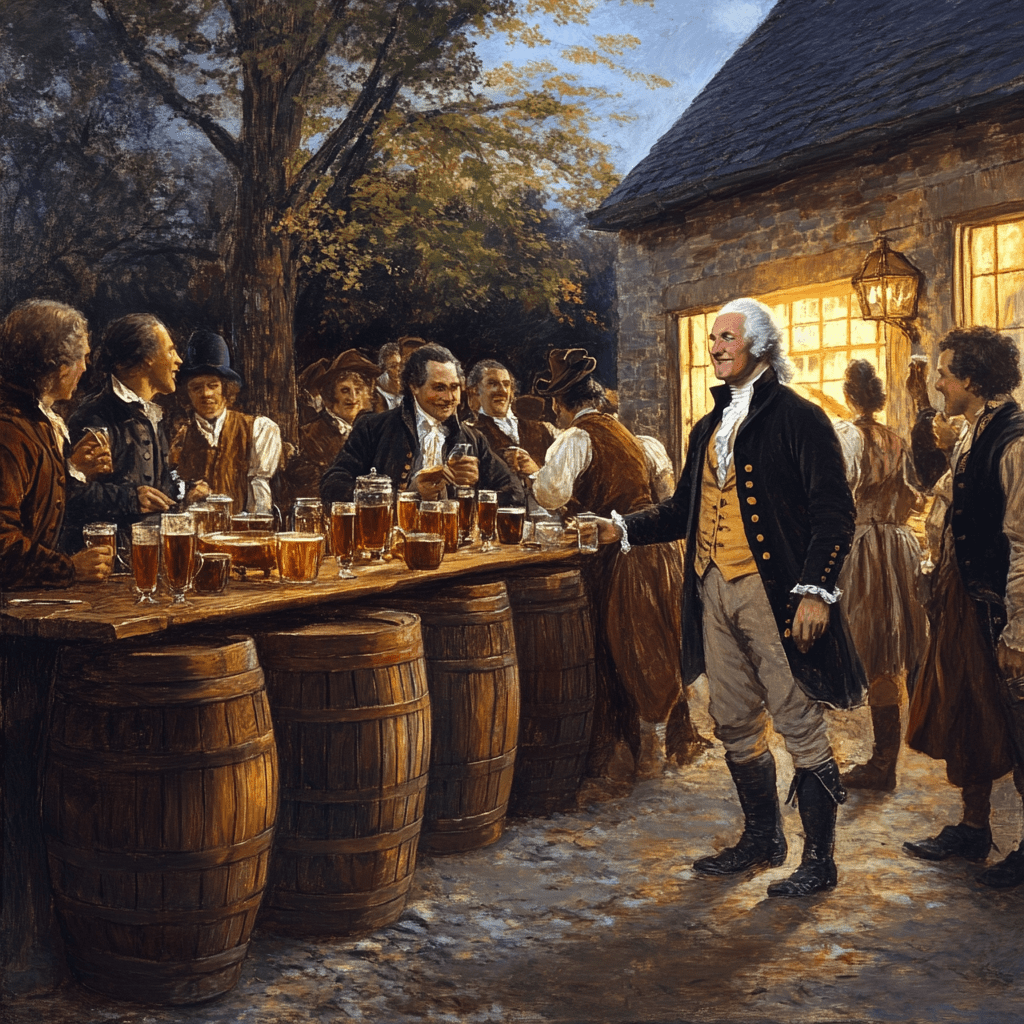
Take George Washington, for example. In 1758, he ran for a seat in the Virginia House of Burgesses and came prepared with booze. He handed out 144 gallons of rum, punch, hard cider, and beer to win over voters. Spoiler alert: he won. So, in a sense, you could say Washington didn’t just become the Father of Our Country—he was also the original “buy the bar a round” guy.
Rum in the American Revolution: The Molasses Act Backfires
Rum’s influence wasn’t just limited to local elections—it even had a hand in lighting the fuse of the American Revolution. The British, seeing how popular rum was, decided to get greedy and impose the Molasses Act of 1733, which slapped a hefty tax on molasses imported from non-British colonies. Given that molasses was a key ingredient in making rum, this act hit the American colonists where it hurt.
Naturally, instead of paying the tax, the colonists did what any rebellious group would do—they turned to smuggling. By the time the revolution rolled around, rum had become a symbol of colonial resistance. It’s not a stretch to say rum helped fuel the rebellion—both metaphorically and literally.
Rum’s Fall from Financial Grace
Like all good things, the era of rum as currency came to an end. As the American economy grew more formal, rum slowly lost its place as a go-to trade item. Paper money became the norm, banks popped up, and rum went back to being a drink instead of a paycheck. However, rum’s legacy as currency isn’t completely forgotten. Believe it or not, in places like the British Virgin Islands, rum was accepted as payment well into the 20th century!
From Booze to Bucks and Back Again
While rum might not pay your taxes today, its history as currency shows just how valuable it was in shaping economies, elections, and even revolutions. So next time you sip on a glass of rum, remember—you’re drinking something that once held the power of cold hard cash. It’s not just booze; it’s history in a glass.
Want More Rum History?
Check out our latest posts on rum’s role in global trade and revolutions, plus dive into our tasting notes on rums that are still worth their weight in gold.
 The Rumosphere